From Digestion to Motion – We Heal with Precision !!

Inflammatory Bowel Disease

Hope, Healing, and Help for IBD

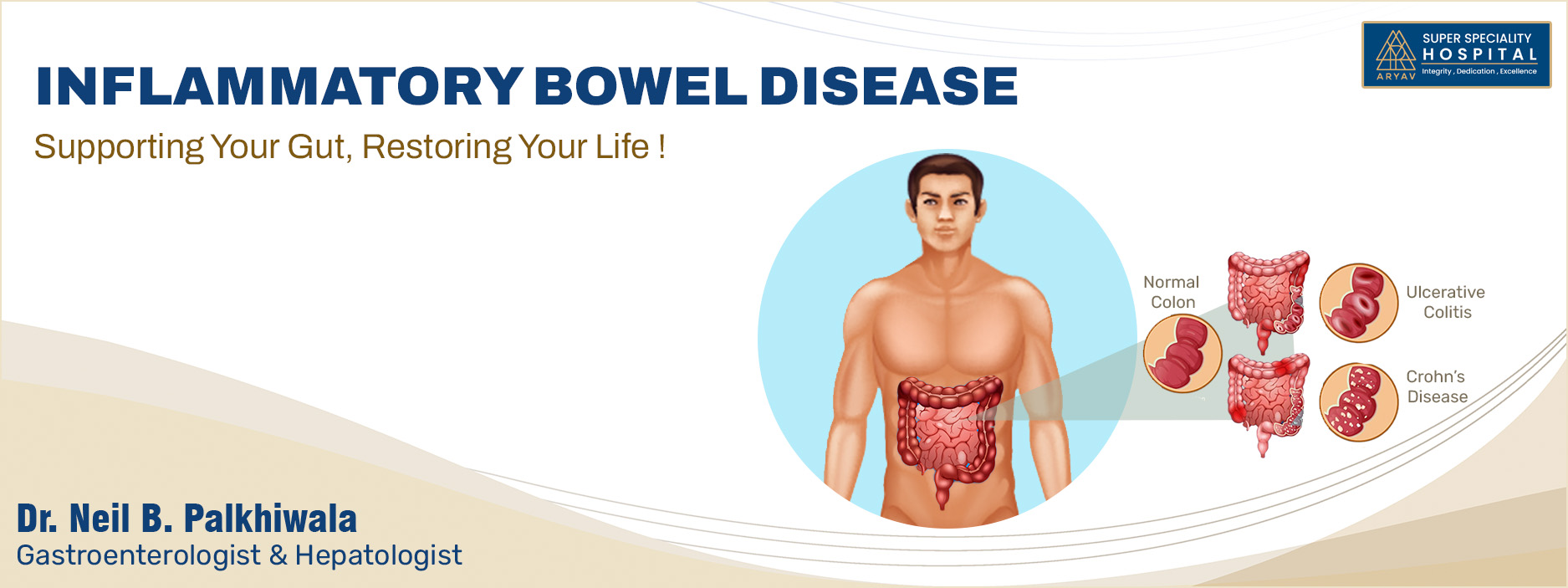
What is Inflammatory Bowel Disease?

Inflammatory Bowel Disease (IBD) is a long-term condition marked by recurring inflammation of the gastrointestinal (GI) tract. This inflammation interferes with digestion, nutrient absorption, and overall gut health. IBD mainly includes two conditions: Crohn’s Disease and Ulcerative Colitis. Both cause inflammation, but they differ in location, depth, and presentation.

Symptoms of IBD

Types of IBD

1. Crohn’s Disease

2. Ulcerative Colitis

How is Irritable Bowel Syndrome (IBS) Diagnosed?

Diagnosis involves a combination of clinical evaluation, laboratory and imaging tests:

Treatment Options for IBD

While IBD has no permanent cure, it can be managed effectively with:

1. Medications

2. Dietary & Lifestyle Changes

3. Surgery

Long-Term Monitoring:

Dr. Neil Palkhiwala – IBD Specialist in Ahmedabad

Dr. Neil Palkhiwala offers expert care for patients with Crohn’s Disease and Ulcerative Colitis. With advanced skills in colonoscopy, capsule endoscopy, and therapeutic endoscopic procedures, he provides timely diagnosis, effective treatment, and long-term management tailored to each patient’s needs.
Make an appointment for your gastrointestinal (GI) tract care with Dr. Neil Palkhiwala, the director and head of Aryav SuperSpeciality Hospital in Ahmedabad. To schedule an appointment or ask queries, give us a call at +91 91069 95254.
What’s the treatment for IBD?
Treatment for IBD focuses on reducing inflammation, controlling symptoms, and preventing flare-ups. It may include medication, dietary changes, and in some cases, minimally invasive procedures guided by a specialist like Dr. Neil Palkhiwala.
IBD triggers vary but often include stress, infections, certain foods, smoking, and irregular medication use. Environmental and genetic factors can also contribute to flare-ups in Crohn’s disease or ulcerative colitis.
Prevention involves maintaining a balanced diet, staying hydrated, managing stress, avoiding smoking, and following prescribed medications. Regular follow-ups with a gastroenterologist help monitor the condition and prevent complications.
Common symptoms of IBD include persistent abdominal pain, diarrhea, weight loss, and fatigue. Some patients may also experience blood in the stool or loss of appetite during active inflammation.
IBD is diagnosed through a combination of medical history, blood and stool tests, colonoscopy, endoscopy, and imaging studies. A gastroenterologist interprets these results to determine the type and severity of the condition.