From Digestion to Motion – We Heal with Precision !!

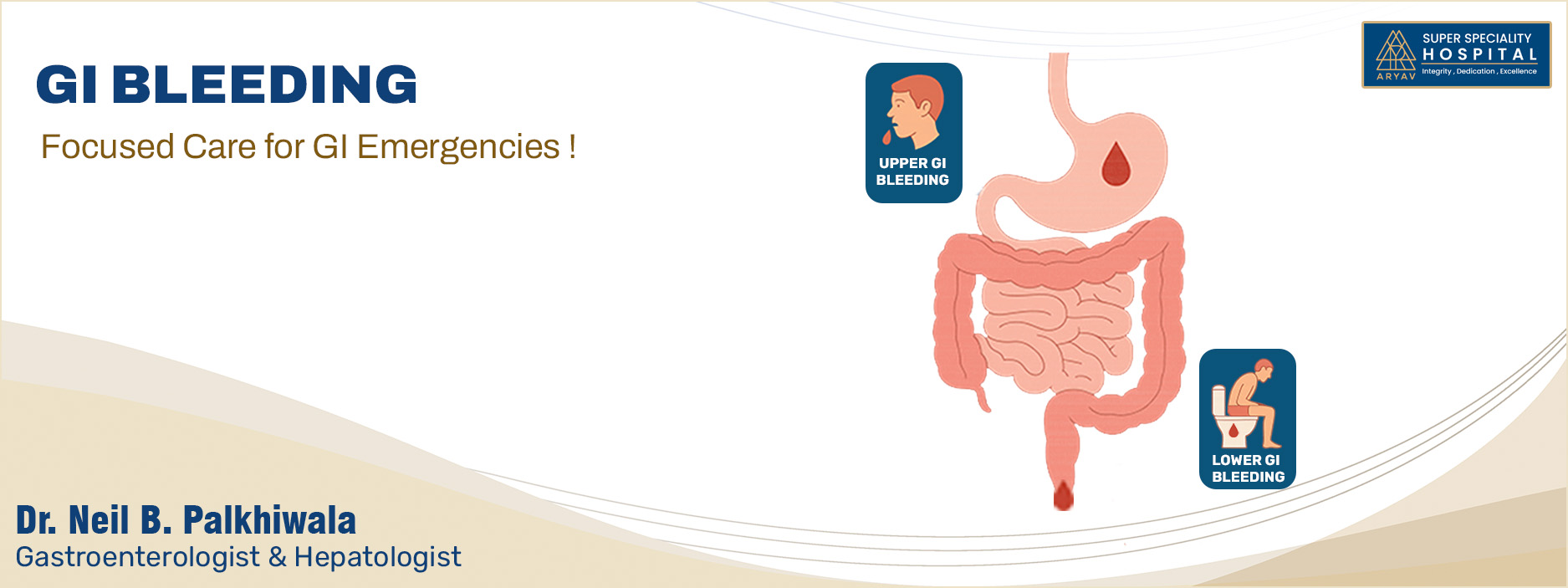
GI Bleeding

Advanced Endoscopy for GI Bleed Control

What is GI Bleeding?

Gastrointestinal (GI) bleeding refers to bleeding that occurs anywhere along the digestive tract, including the esophagus, stomach, small intestine, colon, rectum, or anus. It may be mild or life-threatening, and can present as vomiting blood, black/tarry stools, or bright red blood in stool.


Causes of GI Bleeding:

Upper GI Bleeding

Upper GI Bleeding

Symptoms of GI Bleeding

Diagnosis of GI Bleeding

Treatment of GI Bleeding

Treatment depends on the location, severity, and cause of bleeding:

Dr. Neil Palkhiwala – GI Bleeding Specialist in Ahmedabad

Dr. Neil Palkhiwala is an expert in diagnosing and managing Gastrointestinal (GI) Bleeding. Using advanced endoscopic procedures like clipping, banding, and cauterization—along with targeted medications—he ensures accurate treatment and effective bleeding control. In complex cases, he also performs angiographic procedures or surgical interventions to ensure patient safety and recovery.
Make an appointment for your GI care with Dr. Neil Palkhiwala, the director and head of Aryav SuperSpeciality Hospital in Ahmedabad. To schedule an appointment or ask queries, give us a call at +91 91069 95254.
Which doctor to consult for gastrointestinal bleeding?
A gastroenterologist is the best doctor to consult for gastrointestinal (GI) bleeding. In Ahmedabad, Dr. Neil Palkhiwala specializes in diagnosing and treating GI bleeding using advanced endoscopic and minimally invasive techniques.
Diagnosis involves a detailed medical history, blood tests, and advanced imaging or endoscopic procedures such as upper GI endoscopy or colonoscopy to locate and assess the source of bleeding.
Treatment depends on the cause and severity of the bleeding. It may include endoscopic therapy to stop active bleeding, medication to manage ulcers or inflammation, and supportive care to stabilize the patient.
Yes, GI bleeding can be serious if not treated promptly. It may lead to anemia or other complications. Early diagnosis and specialist care are crucial for effective recovery and preventing recurrence.
Preventing GI bleeding involves managing underlying conditions like ulcers or gastritis, avoiding excessive painkillers or alcohol, and maintaining regular check-ups with a gastroenterologist.