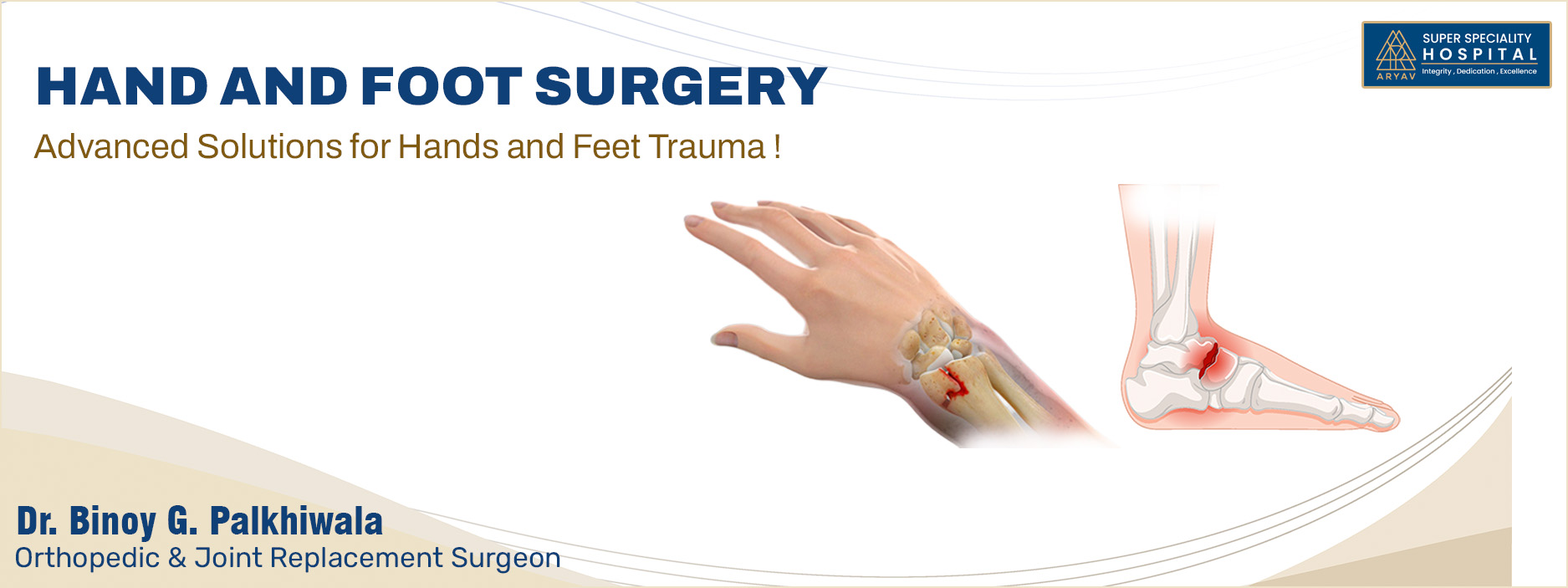
Hand joint replacement, also known as arthroplasty, is performed when arthritis severely damages the small joints of the hand, causing stiffness, pain, and reduced mobility. Over time, cartilage between the finger joints wears away, leading to bone-on-bone friction. In this surgery, the damaged joint is replaced with an artificial implant that restores smoother movement, reduces pain, and improves hand function. It is most commonly done for the knuckles (metacarpophalangeal joints) affected by rheumatoid arthritis, osteoarthritis, or post-traumatic arthritis. The goal is to help patients regain the ability to perform daily activities with greater ease and comfort.
Hand fractures can occur in the fingers, metacarpals, or wrist bones due to accidents, sports injuries, or falls. When fractures are complex, unstable, or involve multiple bone fragments, surgical treatment may be required. The surgery typically involves:
The primary aim is to ensure proper bone healing, restore grip strength, prevent deformity, and maintain hand mobility. Early intervention and rehabilitation exercises after surgery are crucial for regaining full function.
Ligaments are essential structures that keep the joints of the hand stable and enable smooth, coordinated movements. When these ligaments are injured—often due to sports activities, falls, or accidents—they can cause pain, swelling, reduced grip strength, and joint instability.
If rest, splinting, or physiotherapy are not enough, surgical treatment may be advised. Depending on the extent of the injury:
The aim of surgery is to restore joint stability, relieve pain, and improve hand function. After surgery, a structured rehabilitation program with hand therapy is crucial for regaining strength, mobility, and long-term results.
Ankle replacement surgery, also called total ankle arthroplasty, is performed to relieve severe ankle pain and stiffness caused by arthritis, injury, or degenerative conditions. In this procedure, the damaged parts of the ankle joint are removed and replaced with artificial implants designed to restore natural movement. It helps patients regain mobility, reduce chronic pain, and improve quality of life when conservative treatments no longer work. Unlike ankle fusion, replacement allows better flexibility and motion in the joint. The procedure is particularly beneficial for patients with end-stage arthritis, where daily activities like walking become difficult. Advanced surgical techniques and modern implants ensure greater precision, durability, and faster recovery. Post-surgery, physiotherapy plays a crucial role in restoring strength and movement. With proper care, ankle replacement can provide long-lasting relief and help patients return to an active lifestyle.
Talus replacement is a specialized surgery performed when the talus bone of the ankle is severely damaged due to arthritis, trauma, or a condition like avascular necrosis (loss of blood supply to the bone). In this procedure, the diseased talus is removed and replaced with a custom-designed artificial implant that mimics the natural shape and function of the bone. The goal is to relieve pain, restore mobility, and preserve ankle motion without the need for fusion. This surgery is especially useful for patients who are not good candidates for ankle fusion or total ankle replacement. By maintaining the natural movement of the ankle, talus replacement helps improve walking ability and quality of life. With advancements in 3D printing and modern implant technology, results have become more precise and long-lasting. Rehabilitation after surgery focuses on gradually regaining strength, balance, and range of motion.
Ankle arthroscopy is a minimally invasive surgical technique used to diagnose and treat ligament injuries in the ankle. Through tiny incisions, a small camera and instruments are inserted to repair or reconstruct damaged ligaments. This procedure helps restore ankle stability, strength, and mobility while minimizing tissue damage. It is commonly used for conditions like chronic ankle instability, torn ligaments, or scar tissue formation after repeated sprains. Compared to open surgery, arthroscopy offers faster recovery, smaller scars, and less post-operative pain. Patients can usually begin rehabilitation earlier, focusing on regaining motion and balance. With precise repair, ankle arthroscopy significantly reduces the risk of future injuries. It is an effective option for athletes and active individuals who wish to return to their normal activities quickly and safely.
Accidental foot injuries like severe fractures, ligament tears, or deep wounds often need surgery for proper recovery. Surgical treatment may involve repairing bones, fixing ligaments or tendons, and addressing soft tissue damage. In some cases, plates, screws, or pins are used to stabilize the foot. Timely surgery helps restore movement, reduce pain, and prevent long-term complications. With proper care and physiotherapy, most patients regain good function and return to daily activities.
Ankle fracture surgery is performed when the bones of the ankle break and cannot heal properly with casting or splinting alone. It involves realigning the broken bones (open reduction) and stabilizing them using plates, screws, or rods to ensure correct healing. Surgery is usually recommended in cases of severe displacement, multiple fractures, or instability of the ankle joint. Patients may experience pain, swelling, and difficulty bearing weight before surgery. The procedure helps restore joint alignment, stability, and mobility, preventing long-term complications like arthritis or chronic pain. Recovery typically includes immobilization, physiotherapy, and gradual return to weight-bearing activities. With proper care and rehabilitation, most patients regain near-normal function of the ankle.
Dr. Binoy Palkhiwala is a skilled orthopedic surgeon in Ahmedabad specializing in Hand and Foot Surgery. With expertise in advanced surgical techniques, he offers personalized treatment plans to help patients recover mobility, reduce pain, and regain confidence in their daily lives.
Book your consultation with Dr. Binoy Palkhiwala, Founder of Aryav Superspeciality Hospital, Ahmedabad. For appointments or queries, call us at +91 8511451161.